
Renewable Energy
The IPP competitive field: who is actually building
Intela Research
8 min read
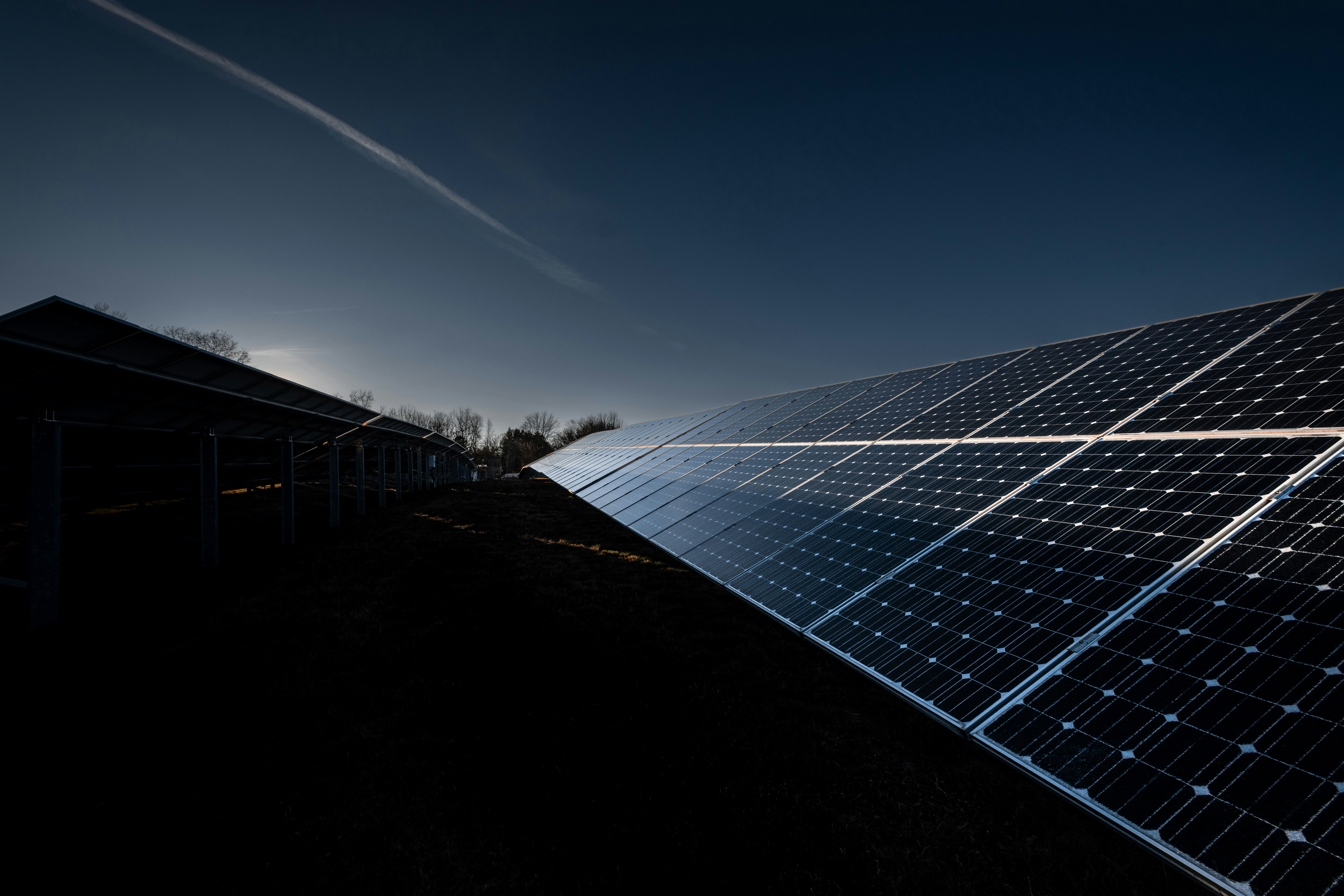
Zimbabwe has 174 licensed independent power producers. Sixty-eight of them generate electricity.
That ratio is the most informative statistic in the country’s energy sector, and it explains almost everything about how competition among developers actually works. Licences are obtainable. Land is available. Solar resource is abundant, irradiation averaging 20 megajoules per square metre across roughly 3,000 sunshine hours a year. None of these are scarce, and therefore none of them are competitive advantages.
Two things are scarce: creditworthy off-take, and equity willing to accept an unlevered return in a market with no debt at a sensible price. Competition in Zimbabwean renewable energy is a competition for those two things, and the field is sorting itself accordingly.
The demand backdrop
Installed capacity stands at approximately 2,317 megawatts. Actual available capacity runs between 1,200 and 1,400 megawatts depending on hydrology at Kariba, which averaged around 26 per cent of nameplate through the recent drought cycle. Peak demand is roughly 2,200 megawatts. The deficit is 800 to 1,000 megawatts, covered by imports from Mozambique, Zambia and South Africa, over 22 per cent of the national mix in 2023.
The policy target is 26.5 per cent of generation capacity from renewables, excluding large hydro, by 2030, with a stated national ambition of 2,000 megawatts of renewable capacity by the same date.
This is a market with a structural, decade-long shortfall and a credible policy target. The demand is not in question. The route to being paid for meeting it is.
Three archetypes, and how each is faring
The developers who are actually building fall into three groups, distinguished by how they solved the off-take problem.
Archetype one: captive corporate self-generation
This group solved the off-taker problem by being the off-taker. It is winning.
Zimplats is advancing a 185 megawatt solar programme; 35 megawatts of its initial 80 megawatt phase is commissioned, with the remaining 45 megawatts progressing following factory acceptance testing.
Caledonia Mining commissioned a 12.2 megawatt plant at Blanket Mine, supplying roughly 21 per cent of the mine’s energy requirement, and subsequently sold it to CrossBoundary Energy for US$22.35 million in April 2025 under an exclusive twenty-five-year power purchase agreement, a clean demonstration that a built, contracted Zimbabwean solar asset has an international buyer.
Eureka Gold Mine commissioned a 5.4 megawatt plant in July 2026, on a project estimated at US$12 to US$15 million.
Alongside these sit long-established agricultural and industrial self-generators: Hippo Valley Estates at 39 megawatts, Triangle Estates at 35 megawatts and Nottingham Estate at 2.25 megawatts, all off-grid for own consumption.
The pattern is unmistakable. Where the generator and the consumer are the same balance sheet, projects get built. Zimbabwe’s mining sector, 13 per cent of GDP, requiring roughly 2,000 megawatts, and represented by more than a hundred firms in the Zimbabwe Intensive Energy Users Group, is the most creditworthy off-take pool in the country, and it is being served first.
Archetype two: the grid-connected merchant IPP
This group has struggled, and the reason is singular: ZETDC cannot reliably pay in United States dollars.
The licensed pipeline is long, De Green Rhino Solar at 50 megawatts, Energywise’s Vungu Solar at 30 megawatts, Murombedzi at 10.5 megawatts, Equinox and Mutorashanga Indo Africa at 10 megawatts each, Guruve at 5.5 megawatts. Very little of it converted for years.
What changed the position was the Government Project Support Agreement, introduced in 2024: a standardised implementation agreement providing a governmental guarantee on bankability, cost-reflective tariffs, a power off-take commitment and offshore repatriation of funds.
Vungu Solar is the proof case. PIDG’s InfraCo Africa invested US$1.5 million of equity plus US$90,000 in technical assistance, and the project signed a twenty-five-year power purchase agreement with ZETDC in early 2026, Zimbabwe’s first internationally project-financed solar IPP. It is deliberately being used to template the standardised PPA, government support agreement and central bank undertaking for the projects behind it.
Centragrid’s 25 megawatt Nyabira plant took the domestic route to the same end, funded by NSSA and Old Mutual, and is exporting some 36.5 gigawatt-hours to the grid.
Momentum is now visible. Total private-led construction in progress stands at 635 megawatts, with a further 730 megawatts at financial close, implying 1,365 megawatts of new capacity by December 2026. Within that: Mapanzure (50 megawatts, China–Zimbabwe) around 70 per cent complete; Houyontong/Bijou (100 megawatts) around 45 per cent; Power Ventures (25 megawatts, near Victoria Falls) around 85 per cent; Solgas expanding Hwange from 5 to 15 megawatts and seeking US$7.54 million.
Archetype three: institutionally-funded distributed generation
This is the newest group, the smallest, and in our view the best risk-adjusted position available.
The structure anchors generation on a captive, creditworthy, privately-owned demand base, a property portfolio, an institution, a campus, funded by domestic institutional capital under the prescribed asset framework, with the grid as buyer of last resort rather than sole buyer.
Precedents exist. The 1 megawatt plant at Mater Dei Hospital in Bulawayo. The National Railways of Zimbabwe Contributory Pension Fund solar roof programme, deployed as a prescribed asset. REF Zimbabwe, managed by Old Mutual with prescribed asset status.
The logic is that it inverts the hardest problem. Rather than selling power to a distressed utility, the project displaces a retail tariff, ZETDC supplies at approximately US$180 per megawatt-hour, for a consumer who is contractually and commercially bound to the sponsor. That converts counterparty credit risk into demand risk, and demand risk is far easier to underwrite. The revision of the net metering threshold to 5 megawatts per business makes this structure materially more scalable than it was.
This is where Intela’s own programme sits, and readers should weight our enthusiasm accordingly.
What is about to change the competition
Competitive bidding. Zimbabwe has announced the introduction of competitive bidding for power projects from 2026, replacing bilateral negotiation with ZETDC as the primary route to grid-connected off-take. Supported by a US$5 million World Bank grant for transaction advisory to develop at least two bankable solar IPP tender frameworks, this is intended to bring transparency and cost-effectiveness.
It will also redistribute advantage sharply. Competitive procurement favours developers with balance sheet, ready-to-build project documentation and speed. It disadvantages the developer whose principal asset is a licence and a site held in anticipation of a negotiated deal. A significant portion of the 106 licensed-but-non-generating IPPs are in exactly that position.
International capital is arriving. CrossBoundary Energy is now an owner in Zimbabwe. IFC partnered with Voltalia in October 2025 to deploy hybrid renewable capacity for African mining operations, with Blanket Mine explicitly in the portfolio and project sizes of US$20 to US$150 million. Gulf sovereign wealth funds had invested over US$101.9 billion in African renewables by end-2024 and are engaging Zimbabwe through ZIDA. Domestic developers should expect better-capitalised competition for the best off-take.
The constraints nobody escapes
Grid. The transmission network is aged and undercapitalised. Reports of a large majority of Southern African Power Pool trades failing to clear on transmission constraints at the Central Transmission Corridor should concern anyone modelling export revenue.
Currency convertibility. Even where PPAs are USD-denominated, domestic foreign exchange liquidity creates repatriation barriers. A dollar tariff is not the same as a dollar received offshore.
Regulatory independence. ZERA’s decisions can be overturned by the executive, and tariff-setting is not fully insulated from political intervention.
Where we think this settles
Zimbabwe will add more solar capacity in the next thirty-six months than in the preceding twenty years. The question is who owns it.
Our expectation is that the mining and industrial captive market will continue to be served first and fastest, largely by international developers with mining relationships. The grid-connected utility-scale market will consolidate around a smaller number of sponsors capable of clearing a competitive tender. And the distributed, institutionally-funded, property-anchored segment, the one requiring local origination, local off-take relationships and access to domestic prescribed asset capital, will remain the least contested, because it is the least visible from outside the country.
That is a preference disclosed, not a prediction offered.
*This article is provided for general information and does not constitute investment advice. Intela Land & Property develops renewable energy projects in Zimbabwe and is a participant in the market described.*
Sources: Intela, *IPP Market Intelligence Report*, March 2026; The Herald reporting on private-led generation capacity, 2026; SolarQuarter and Financial Afrik reporting on Zimplats and Eureka commissioning, July 2026; PVknowhow on competitive bidding plans for 2026; Intela, *Capital Deployment in Zimbabwe’s Real Estate & Renewable Energy Sectors* (2024–2026).
© 2026 Intela Land and Property
Contact US
Let’s talk about your next development.
We work with landowners, families, corporations and institutions in Bulawayo and across Zimbabwe. If you are planning a development, or looking to place capital in one, we should meet.
Intela Land and Property
Intela Land and Property is a Bulawayo-based real estate developer and renewable energy investor, delivering residential and purpose-built commercial property across Zimbabwe.
© 2026 Intela Land & Property. All rights reserved.
Registered in Zimbabwe. Bulawayo.